Breastfeeding Co-Sleeping Boy – Modern: Honest Embroidery Review
As someone who has stitched thousands of designs and sold at more craft fairs than I can count, I know the difference between a design that sits unsold and one that draws customers from across the room. When I first opened the Breastfeeding Co-Sleeping Boy – Modern embroidery file, I felt a genuine spark of excitement. This is a design that speaks directly to a growing community of parents who parent differently, and that emotional connection is pure gold for a craft fair product.
I am going to walk you through exactly what I see in this machine embroidery design, how I would use it in my booth, what products it works best on, and the technical considerations you need to check before you start stitching. If you are an Etsy seller, a small shop product creator, or a boutique maker looking for fresh design assets, read closely.
First Impression: Modern, Warm, and Conversation-Starting
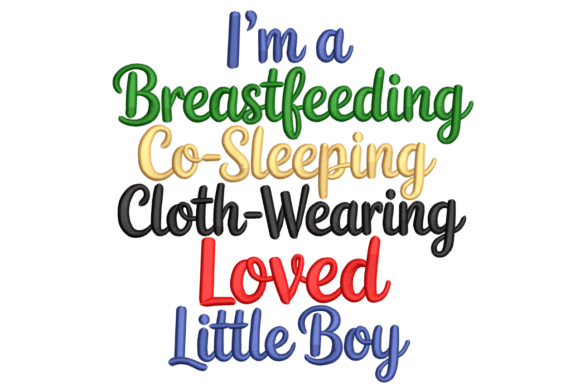
The moment I saw Breastfeeding Co-Sleeping Boy – Modern, I noticed how it balances a bold statement with a soft, modern aesthetic. The wording is clear and proud — “I’m a Breastfeeding, Co-Sleeping, Cloth-Wearing Loved Little Boy” — and the overall feel is celebratory rather than confrontational. It lands in the sweet spot between cute and empowering. That is exactly the kind of energy that sells at a handmade product booth.
Parents who practice attachment parenting, gentle parenting, or simply want to honour their child’s early years will feel seen by this design. That emotional resonance means they are far more likely to stop at your table, pick up the item, and make a purchase. In the Nursery category, this design is both decorative and meaningful — it works as a gift for a baby shower, a first birthday, or a “just because” present for a like-minded parent.
The font choices and layout appear well spaced and readable, which is critical when you are selling finished products to browsing customers who only glance for a few seconds. If you have ever watched shoppers scan your booth, you know that clarity equals sales.
Tote Bags and Market Bags
I would absolutely stitch Breastfeeding Co-Sleeping Boy – Modern onto a sturdy canvas tote bag. It becomes a wearable statement piece that parents can carry to the library, the park, or the grocery store. The design’s length works well horizontally across the front of a tote, and because the wording is the star, it does not compete with busy fabric. A medium to large hoop size is best here, so check that your hoop can accommodate the full design before cutting fabric.
Aprons and Tea Towels
For kitchen items, this design adds a personal, warm touch. An apron embroidery featuring this quote would make a thoughtful gift for a breastfeeding mother who loves to cook. Tea towel embroidery is another favorite of mine: they are low-cost to produce, easy to stock, and sell quickly at market. The design’s message fits naturally in a cozy kitchen setting. Just be careful with fabric texture — bumpy linen or thick cotton can bury fine details, so test on a similar fabric first.
Embroidered Patches
I love embroidered patch applications for this design. Patches are fast to stitch in batches, easy to display in a grid on your booth table, and they appeal to shoppers who want a low-cost, high-impact item. A patch of Breastfeeding Co-Sleeping Boy – Modern can be sewn onto a jacket, a backpack, or a diaper bag. It is a versatile commercial embroidery product that you can produce ahead of time and sell without customisation wait times.
Pillow Covers and Fabric Pouches
This design also works beautifully on a small throw pillow or a cloth fabric pouch. Both items are popular at baby-related craft fairs, and they allow the buyer to bring the sentiment into their home. A pillow cover with this design can be a nursery accent piece, while a pouch is perfect for storing breast pads, burp cloths, or small toys. Because these items are often handled and displayed close-up, the stitch density and clarity of the lettering become especially important — more on that below.
At-a-Glance Appeal
At a craft fair, you have about three seconds to capture a passerby’s attention. Breastfeeding Co-Sleeping Boy – Modern passes that test because its first words are immediately recognisable and the layout guides the eye naturally. I would place this item at eye level on my booth table, paired with a simple sign that says “Perfect for the modern nursery” or “Celebrate your parenting journey.” When customers stop to read, the conversation often leads to a sale.
Small Accent or Large Focal Design
This design is versatile in size. It can be stitched as a smaller accent on a bib or a burp cloth, or scaled up to become the main focal point on a tote or apron. If you shrink it significantly, be mindful that the lettering stays legible. I would not go below a certain width on fine details — test on scrap fabric at different sizes to find your sweet spot.
Photography for Online Listings
If you sell online, good photography is everything. This design photographs well because its message is clear and the layout is balanced. Use natural light and a neutral background so the wording pops. I like to include one printable mockup showing the design on a tote bag, plus a photo of the actual finished product on a real fabric. Shoppers want to see how the design looks in real life, especially with lettering. If you have a digital embroidery file, consider creating a mockup before you stitch the first batch to test placement and proportion.
Technical Notes from the Embroidery Chair
Before you start a production run, there are a few things you need to verify on your own machine with the actual embroidery file. Because the product description says “detailed machine embroidery design,” I expect some moderate stitch work, but without seeing the exact file I cannot confirm stitch count or thread colors. Here is what I recommend:
- Test on scrap fabric that matches what you plan to sell. A cotton muslin will behave differently than a thick canvas or a towel. Run a test stitch-out and inspect every letter.
- Check thread contrast against the fabric. Light thread on dark fabric can look sharp, but dark thread on dark fabric may lose detail. For this design, a medium to high contrast works best so the message is readable from a distance.
- Review spacing and lettering size carefully. If any letters touch or the spacing feels crowded, the design may look messy at smaller hoop sizes. If you need to adjust, consider editing the file or choosing a larger hoop.
- Confirm hoop size that the design requires. Make sure your hoop can accommodate the full layout without distortion. Hooping too tight or too loose can throw off registration.
- Inspect stitch density in the filled areas. Dense stitching can cause fabric puckering, especially on lightweight or stretchy fabrics. If the design feels too dense, you might need a heavier stabilizer or a different fabric choice.
- Use the right stabilizer for your fabric. For tote bags and aprons, a tear-away or cut-away stabiliser works well. For towels, a water-soluble topper can help prevent stitches from sinking into the nap.
- Create at least one real mockup before you commit to a bulk order. Stitch the design onto the exact product you plan to sell, then display it in your booth as a sample. Customers love seeing the real thing, and you will catch any issues before you stitch fifty pieces.
- Confirm commercial licensing before selling finished products. The product description does not specify license terms, so check with the designer or platform to ensure you have the right to use the machine embroidery design for commercial embroidery sales. Most designers offer a separate commercial license or include it in the purchase. Do not assume — verify.
Dense Stitch Areas and Tiny Details
Because this design includes lettering, pay special attention to areas where letters have thin strokes or serifs. Small letters can become blobs if the stitch density is too high or if the fabric shifts during stitching. If you are stitching onto a textured towel or a curved cap surface, the risk increases. On caps, the design will need to be placed on the front panel and hooped carefully. I would not recommend shrinking the design too small for a cap — keep it at a readable size so the words remain distinct.
For dark fabric, a white or very light thread color will create the best contrast. Test with a bright white thread on a dark navy or black fabric — the result can be stunning if the density is right. Just be aware that dark fabrics show every thread break and tension issue, so your machine needs to be in top shape.
Visual Appeal, Customer Attention, and Booth Display
At my last craft fair, I watched a mother walk past five booths before stopping at mine to read an embroidered tote bag. She picked it up, smiled, and said, “This is exactly us.” That is the power of a design like Breastfeeding Co-Sleeping Boy – Modern. It creates a direct emotional connection with a specific customer base. When you display it well — on a tabletop easel, hanging from a grid wall, or draped over a basket — it becomes a magnet for parents who practice attachment parenting or cloth diapering.
The handmade quality of your stitching will either reinforce or undermine that connection. A clean, well-hooped, well-tensioned stitch-out says, “This item is made with care.” A sloppy stitch-out with loose threads or uneven letters says the opposite. Take the time to dial in your settings, and your brand consistency will grow with every piece you produce.
For batch production, this design is repeatable. Once you have tested and confirmed your settings, you can stitch multiple items in a row with confidence. I would suggest making a few extras for your booth stock — when one design sells well, you want to have backup pieces ready to refill your display.
Final Thoughts from an Embroidery Designer
Breastfeeding Co-Sleeping Boy – Modern is a strong, sellable, and emotionally resonant design for any craft fair product line aimed at modern parents. Its clear message, attractive layout, and versatile application range make it a solid addition to your design assets. Whether you stitch it on a tote, a towel, a patch, or a pillow, it will stand out on your booth table and resonate with buyers who value intentional parenting.
Do the technical prep work: test the embroidery file on your machine, check the hoop size, adjust the stabilizer to match your fabric, and create that real-world sample. When you put the finished product in front of a customer, the quality will speak for itself. And that, ultimately, is what turns a great design into a bestseller.