Hello 2026: Modern Outline Design Review
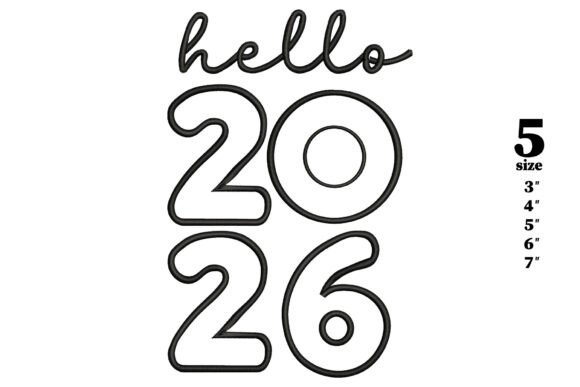
When I first pulled up the Hello 2026 machine embroidery design, the clean cursive hello paired with the bold, large 2026 immediately felt both friendly and polished. As someone who reviews embroidery files for small business merchandise, I look for designs that can carry a brand’s voice — whether that’s warm, playful, or premium. This digital embroidery file delivers a contemporary outline style that is versatile enough for custom apparel, embroidered patches, and branded product labels. It lands in the Holidays Celebrations category, but its modern typography gives it a year-round potential for businesses wanting to mark the 2026 milestone in a stylish way.
Visual Personality and Brand Fit
Hello 2026 communicates a welcoming, forward-looking attitude. The cursive hello is approachable, while the large block-style 2026 anchors the design with confidence. This combination works well for small businesses that want to appear both creative and reliable. Imagine a local café using it on a limited-edition tote bag or a boutique adding it to a sleeve accent on staff uniforms. The outline rendering keeps the design light and airy, preventing it from overwhelming smaller items like cap fronts or patch shapes.
For brand identity, this design can adapt to a range of aesthetics. A florist might stitch it in soft pastels on an apron, while a pet brand could use bold black on a bandana. The lack of heavy fill means the stitch density remains moderate, which is a relief for those of us who have wrestled with overly dense designs that pucker fabric. If you are producing small business merch for a creative studio or handmade shop, this design adds a contemporary touch without feeling overly trendy or disposable.
Real-World Business Applications
In practical terms, Hello 2026 shines in several commercial embroidery scenarios. I see it working beautifully as:
- Embroidered patches for jackets, aprons, or caps — the outline style holds up well when stitched on twill or felt.
- Cap embroidery on the front panel, especially if you size it from 2 to 3 inches wide. The cursive hello remains readable at smaller scales.
- Tote bag design as a centered statement or a lower corner accent. The open lines keep the bag feeling modern and uncluttered.
- Apron embroidery for bakeries or coffee shops where a warm, personal greeting fits the service mindset.
- Staff uniforms on chest or sleeve, reinforcing a cohesive brand identity across your team.
- Customer gifts like embroidered handkerchiefs or small pouches as a thank-you for loyalty.
For Etsy sellers or merch creators, this design can be used to produce limited custom apparel for New Year’s events or as a commemorative item for the entire year of 2026. The machine embroidery design file is easy to digitize for various hoops, and the outline nature reduces thread changes, which speeds up production. I would recommend creating a printable mockup for client approval before committing to production, especially if you are pitching the design to a local boutique or café.
Performance Considerations for the Production Floor
No design is perfect for every situation, and Hello 2026 does come with a few points to watch. Because it relies on delicate outlines, the design is sensitive to fabric texture. On rough fabrics like heavy canvas or textured fleece, the thin lines may become lost or distorted. I advise testing it on your target substrate first — a smooth twill or cotton poplin will give the cleanest result.
For cap embroidery, be mindful of the curved surface. The large 2026 numerals may need to be scaled down to fit the front panel without clipping. A hoop size of 4x4 or 5x7 should be sufficient for most placements, but always check the file’s intended dimensions before digitizing. The stitch density is moderate, but if you plan to use it as a small patch (under 2 inches), test the readability of the cursive hello. At very small sizes, the loops may close up — consider a larger size for clarity.
Dark uniforms require careful thread color selection. Light or metallic thread works best to make the outline pop. A white or gold outline on a black ground can feel premium and celebratory. Because the design has open areas, use a good quality stabilizer — cutaway for stretchy fabrics, tear-away for stable wovens — to prevent distortion during stitching. I also recommend a test stitch out on scrap fabric before committing to a batch of embroidered patches or apparel.
Brand Identity, Trust, and Customer Engagement
When I evaluate a design for commercial embroidery, I think about how it will make customers feel. Hello 2026 projects warmth and clarity. For a small business, that translates into a trustworthy first impression. A café with aprons that say hello invites conversation. A boutique using the design on shopping bags reinforces a personal connection. These subtle cues build customer trust and recognition over time.
The design’s outline style also aligns with modern handmade product trends — less is more. It doesn’t scream “holiday decoration”; instead, it serves as a subtle brand marker. For product value, an embroidered item featuring this design feels intentional and custom. A tote bag with Hello 2026 on it isn’t just a bag — it’s a branded keepsake. That emotional connection is what drives repeat purchases and positive word-of-mouth for small businesses.
Because it falls under Holidays Celebrations, you might worry it’s only relevant for a short window. However, the word hello and the year can be used for the entire year as an icebreaker or welcome theme. Many businesses use annual numeral designs in their packaging or signage throughout the year. This flexibility makes it a smart addition to your design assets library.
Practical Embroidery Designer Notes
Before you stitch Hello 2026 on a finished product, I recommend these steps:
- Test it in black and white first. A monochrome test stitch out reveals any spacing issues or line breaks.
- Check the size for small patches. If you plan to use it as a embroidered patch under 2.5 inches, ensure the lettering remains legible. The large 2026 may need to be reduced, but keep the hello proportionally visible.
- Review thread color contrast. For dark fabrics, use a bright or metallic thread. For light fabrics, a dark outline will stand out best.
- Inspect spacing. The cursive hello should connect smoothly without gaps. If the digitized file appears loose, consider adjusting pull compensation.
- Confirm hoop size. A 4x4 hoop can accommodate the design at a moderate size for chest or cap placement. Larger hoops allow for tote bag or back designs.
- Test on real fabric. Every substrate behaves differently. Test on the actual fabric you’ll use for apron embroidery or custom apparel.
- Use proper stabilizer. Cutaway for knits, tear-away for wovens, and consider a water-soluble topping for napped fabrics.
- Create a mockup for client approval. A printable mockup helps the client visualize placement and size before you commit thread.
- Compare it beside other design assets. If your brand has existing embroidery files, ensure Hello 2026 matches in style and proportion.
- Confirm commercial licensing. Since this is a digital embroidery file, verify that your license covers commercial embroidery for resale or branded merchandise. Some files require extended licenses for products sold to customers. Always read the terms.
By following these notes, you’ll avoid common pitfalls like thread breaks, poor registration, or unhappy clients. A simple test run can save yards of wasted fabric and hours of frustration.
Hello 2026 is a thoughtfully designed machine embroidery design that balances modern appeal with practical usability. For small business merchandise, branded patches, and custom apparel, it offers a fresh way to say welcome — whether to the new year or to your brand itself. I would confidently recommend it to any embroidery shop, apparel decorator, or handmade brand looking to elevate their embroidery file library with a piece that stitches cleanly and resonates warmly with customers.